

Jagannath Neela Chakra With Flag: Meaning, Mystery, History & Spiritual Significance
Jagannath Neela Chakra with Flag
The Sacred Disc Atop Puri Temple
There is something about the Jagannath Temple in Puri that stops you in your tracks. That disc, the Neela Chakra and the saffron flag dancing against the blue sky have fascinated pilgrims and scholars alike for centuries.
🛕 Explore Our Jagannath Ji CollectionThere is something about the Jagannath Temple in Puri that stops you in your tracks. Maybe it's the towering shikhara rising 65 metres above the city. Maybe it's the sound of conch shells and bells floating through the air. Or maybe if you're lucky enough to have stood there at the right moment. it's the sight of a brilliant saffron flag dancing against a blue sky, planted atop a mysterious dark blue disc that has fascinated pilgrims and scholars alike for centuries.
That disc is the Jagannath Neela Chakra with Flag and it is considered one of the most sacred symbols in all of Hindu worship.
For millions of devotees, a single glance at the Neela Chakra and the temple flag is not just a visual experience. It is believed to be a form of divine darshan itself. Pilgrims who cannot enter the temple, the aged, the differently-abled, and travellers passing through Puri all of them consider a glimpse of the Neela Chakra atop the temple tower to be deeply auspicious.
But what exactly is this chakra? Why does a fresh flag fly from it every single day? What history, mystery, and spiritual depth lies behind this sacred symbol? Let's explore all of it slowly, reverently, and with the curiosity this incredible subject deserves.

🔵What is the Neela Chakra of Jagannath Temple?
The Neela Chakra, literally meaning Blue Wheel or Blue Disc in Sanskrit is a massive metal disc installed at the very pinnacle of the Jagannath Temple in Puri, Odisha.
It sits at the top of the Nilachakra Madhava (another name for Lord Jagannath), perched on the tallest point of the Deula (the main tower). From anywhere in Puri, if you raise your eyes toward the sky, you will see this chakra. The sacred flag (Patita Pavana Besa flag) flutters from a staff that stands right at the top of this chakra.
The word "Neela" in Sanskrit can mean blue or dark, and also refers to the divine dark colour associated with Lord Vishnu and Lord Krishna. The chakra itself is considered a form of Sudarshana Chakra the divine discus weapon and cosmic symbol associated with Lord Vishnu, of whom Jagannath is considered a manifestation.
In practical terms, the Neela Chakra is made of Ashtadhatu a sacred alloy of eight metals traditionally used in Hindu temple artifacts:
The chakra is not simply decorative. In temple architecture and Hindu cosmology, a chakra at the summit of a temple represents the axis mundi the cosmic axis connecting the earth to the heavens. It is a symbol of divine sovereignty, cosmic order, and spiritual authority. The fact that it was installed at such height in ancient times speaks to extraordinary engineering skill.
🚩What Does the Jagannath Temple Flag Symbolize?
The flag you see flying from the top of the Neela Chakra is called the Patita Pavana flag the flag of the saviour of the fallen. It is triangular in shape and typically saffron or deep red in colour, though the colour can vary depending on the lunar calendar and religious occasion.
The phrase Patita Pavana is one of Lord Jagannath's most beloved titles. It means He who purifies the fallen a reflection of Lord Jagannath's deeply inclusive, compassionate nature. Unlike many temple traditions, the Jagannath cult has historically welcomed devotees across all social strata, and this flag is an expression of that divine accessibility.
The flag itself carries profound symbolism:
-
Divine Presence Proclaimed
When the flag flies, it declares to the world that the Lord resides within. It is a living signal of God's presence in the temple much like a royal standard announces a king's presence in his palace.
-
Protection of Devotees
In Hindu temple tradition, the dhvaja (flag) is considered to protect the land and people around the temple. The Jagannath temple flag is believed to extend this spiritual protection across Puri and beyond.
-
Accessibility and Grace
Because many pilgrims particularly those from historically marginalised communities were once denied entry into the inner sanctum, a tradition arose of worshipping the Neela Chakra and the flag from outside. The sight of the flag came to represent Lord Jagannath's grace reaching out beyond the temple walls to all who longed for him.
-
Connection to the Sun
The temple faces east, and the saffron flag catches the first light of dawn. For devotees, seeing the flag glow in early morning sunlight carries a particular spiritual charge a symbol of divine light piercing the darkness.
📜History of the Neela Chakra
The history of the Neela Chakra is intertwined with the history of the Jagannath Temple itself and that history stretches back over a thousand years.
The present structure of the Jagannath Temple in Puri was primarily built in the 12th century CE during the reign of King Anantavarman Chodaganga Deva of the Eastern Ganga dynasty, around 1135 CE. However, the site itself is considered far more ancient, with references to the deity found in texts that predate the current temple by many centuries.
The Skanda Purana one of the eighteen major Puranas contains detailed descriptions of the Jagannath Temple and the sacred city of Puri (referred to as Purushottama Kshetra). The Neela Chakra is described in these texts as an eternal, cosmic symbol placed at the summit of the Lord's abode.
One historically significant chapter in the chakra's story is its role during foreign invasions. The Puri temple was raided and desecrated multiple times between the 13th and 16th centuries including attacks by Kalapahad (Muhammad Farmuli), a military commander who reportedly melted down temple treasures. Yet the tradition of the Neela Chakra persisted, and the temple was restored each time. In classical Indian culture, a king who conquered or protected a religious site would honour the chakra at its summit as a symbol of divine sanction for his rule.
There is a long-established tradition in Odisha that the Neela Chakra is periodically examined and, if necessary, replaced. The craftsmen who work on it belong to hereditary artisan communities that have served the temple for generations a living link between ancient craft and living devotion.
✨Spiritual Significance of Jagannath Neela Chakra with Flag
In Hindu spirituality, the Sudarshana Chakra is not merely a weapon or ornament, it is a cosmic symbol of profound meaning. The Sudarshana Chakra represents the wheel of time, the cosmic cycle of creation and dissolution, the divine will (dharma chakra), and the protective power of the Supreme.
In Vaishnavism, the tradition in which Lord Jagannath stands at the centre the Sudarshana Chakra is considered an independent divine form, worthy of worship in its own right. The Neela Chakra at Puri is understood to be a manifestation of this cosmic force. Several layers of spiritual significance attach to it:
Cosmic Axis
The chakra at the top of the temple represents the point where heaven and earth meet. In temple cosmology, the shikhara symbolizes Mount Meru the mythic cosmic mountain at the centre of the universe. The chakra at its peak represents divine sovereignty at the heart of all creation.
Protection
The Neela Chakra is believed to radiate protective energy in all directions. Devotees believe that any city or region over which the chakra's shadow falls is blessed and protected from harm. This belief has deep roots in Vaishnava scripture.
Purification
Merely seeing the Neela Chakra is considered an act of purification. In the Skanda Purana, it is written that the sight of the Nilachakra (darshanam papa nashana) destroys accumulated sins. Even a distant glimpse holds such deep meaning for pilgrims.
Liberation
The chakra's darshan is associated with moksha liberation from the cycle of birth and death. The city of Puri itself is considered one of the four sacred dhamas in Hinduism, and the Neela Chakra symbolises the divine presence that makes it so.
The Flag as Living Dharma
The dhvaja stambha (flag post) in a Hindu temple represents the axis connecting devotees to the divine. The fact that it changes daily is a powerful spiritual metaphor: the Lord's grace is perpetually renewed. Divine blessings open anew to the world every morning.
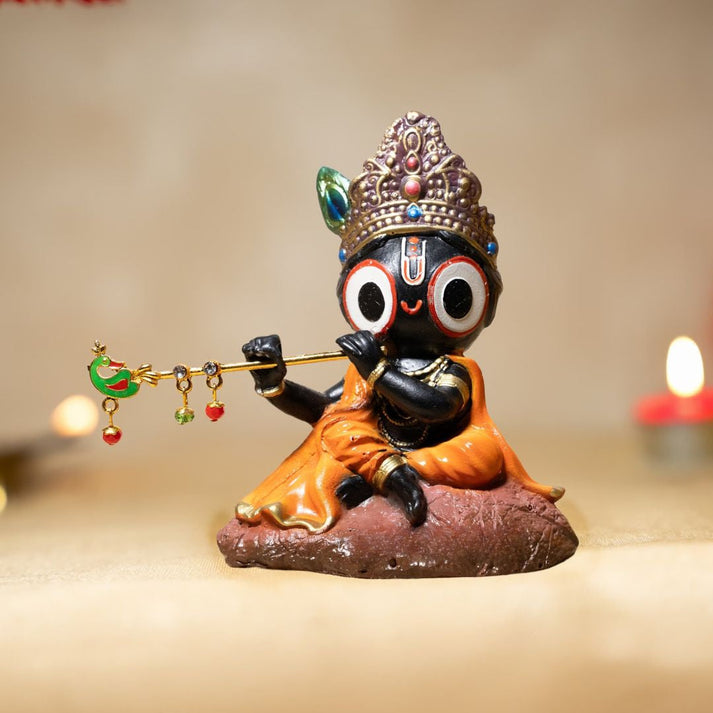
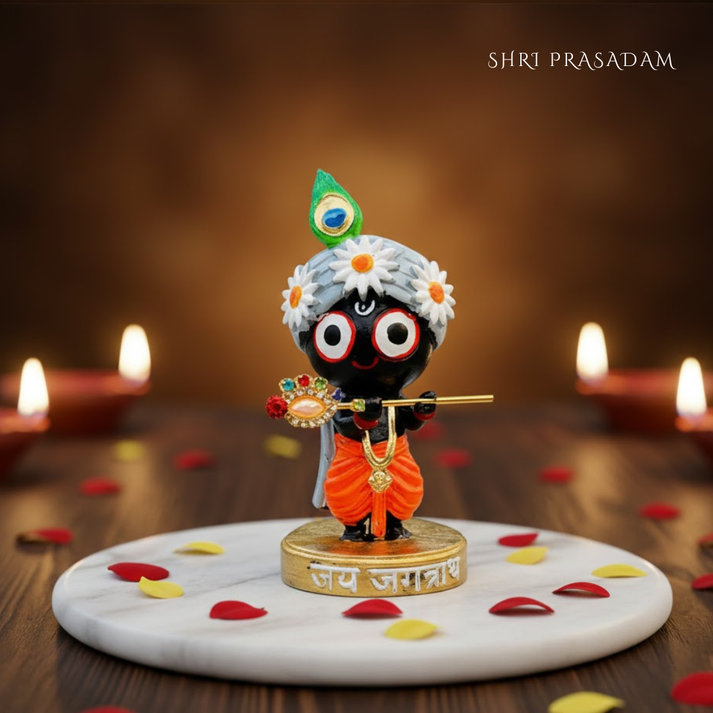
🛕Sacred Jagannath Collection
Bring the divine energy of Lord Jagannath into your home handcrafted with devotion
 Sacred
 Bestseller
🌅Why is the Jagannath Temple Flag Changed Every Day?
Of all the rituals associated with the Neela Chakra, the daily changing of the flag is perhaps the most visually dramatic and spiritually meaningful.
Every single day, without exception, a priest climbs the 45-storey equivalent of the temple tower to change the flag at the top of the Neela Chakra. This is done bare-handed, without any ropes, harnesses, or safety equipment. The climb itself up the sheer face of the ancient stone tower is considered an act of devotion and is one of the most visually remarkable religious rituals in all of India.
The priests who perform this task are called Garuda Sevaks or Dhadi Sevayats. They belong to hereditary priestly families who have performed this service for generations. Their path up the temple tower uses the carved stone surface of the shikhara itself as handholds and footholds a skill passed down through families over centuries.
Why Every Day? Four Powerful Reasons
- Spiritual Freshness: A new flag each day symbolises that the Lord's grace is eternally fresh and renewing. The divine does not grow old or stale yesterday's blessings are not withheld today.
- Visibility of Devotion: The flag-changing is a public act of worship visible to all of Puri a daily reaffirmation of the Lord's presence in the city and in all lives.
- Practical Necessity: Flags exposed to high winds and weather at such an altitude would deteriorate quickly. Daily changing ensures the flag always appears honourable and pristine before the Lord's devotees.
- Traditional Belief: It is said that if the flag is not changed on any given day, it is considered a deeply inauspicious omen for the region. This belief ensures that the ritual is never neglected even during storms.
💡 The ritual is so strictly observed that there are records of priests performing this extraordinary climb during storms and extreme weather rather than allowing a single day to pass without the flag being changed. Such is the depth of devotion woven into this ancient ritual.
🌀Mysteries Associated With Jagannath Temple Flag and Neela Chakra
The Jagannath Temple is one of the most mystically rich temples in India, and the Neela Chakra with its flag is at the heart of many of its most discussed mysteries. These are widely circulated observations and beliefs that form part of the living spiritual and cultural tradition around the temple.
The Flag Defies the Wind
One of the most frequently discussed observations is that the temple flag appears to fly in the opposite direction to the prevailing sea wind. Puri is a coastal city, and the wind almost always blows from the sea (east) toward the land yet devotees and many visitors report that the temple flag often appears to fly from land toward the sea, apparently against the wind. This observation has been made for centuries.
No Shadow at Noon
The Jagannath Temple's main tower is said to cast no visible shadow at noon in a specific direction. This is attributed to the unique architectural design of the shikhara, believed to have been constructed in a way that minimises its midday shadow a feat of ancient architectural precision that continues to astound visitors.
The Chakra Faces Every Direction
The Neela Chakra is said to appear to be facing the observer regardless of which direction they view the temple from. This is consistent with the spherical or multi-faceted design of the chakra, which gives it a uniform appearance from multiple angles creating a sensation of being constantly watched over and welcomed.
The Sound of the Sea
Many visitors note that the sound of the ocean waves distinctly audible just outside the temple becomes inaudible once you pass through the Singhadwara (Lion Gate). The temple effectively creates a sonic barrier, with the ocean waves seeming to disappear inside. This experience has been reported by countless pilgrims across centuries.


🌸Benefits of Seeing the Neela Chakra and Temple Flag
In the devotional tradition of Jagannath, the darshan of the Neela Chakra with flag carries deep significance. The Skanda Purana and other Vaishnava texts describe the sight of the Nilachakra as an act of merit equal to visiting the temple itself. For devotees who may not be able to enter the inner sanctum whether due to physical limitations, historical restrictions, or circumstances of travel the sight of the chakra from outside the temple is considered a complete act of devotion.
Several benefits are traditionally associated with this darshan:
- Purification of the mind and soul from the accumulated effects of past actions
- Peace and spiritual calm following the sight of the divine symbol
- Protection, it is believed that one who regularly sees the chakra is shielded from harm
- Removal of obstacles on one's spiritual and material path
- Auspiciousness, seeing the flag at dawn is considered particularly blessed
- Equal to pilgrimage, some texts suggest that seeing the Neela Chakra is equivalent in merit to completing a full circumambulation of the temple
🙏 These beliefs are held sincerely by millions of devotees and form an important part of the living religious tradition of the Jagannath cult a tradition that has continued unbroken for well over a thousand years.
🏠Can You Keep a Neela Chakra Symbol at Home?
This is a question that many devotees ask, especially those who have visited Puri or are deeply devoted to Lord Jagannath. The short answer is: yes, it is spiritually appropriate to keep a representation of the Neela Chakra or Sudarshana Chakra in your home shrine.
In Vaishnavism, the Sudarshana Chakra is worshipped as a divine form. Images, icons, and symbolic representations of the chakra are regularly installed in homes and personal shrines. Small metal or wooden replicas are available at the Puri temple shops and at religious stores across India, and devotees regularly bring these home as sacred souvenirs.
Traditional Practices for Home Worship
- Place it in the puja room or altar, ideally at a height symbolising its role as a celestial symbol
- Offer it daily prayers along with other deities in your home shrine
- Keep the space around it clean and respectful at all times
- Small replicas are often placed alongside images of Lord Jagannath, Balabhadra, and Subhadra - the divine triad of Puri
💡 There is no prohibition in Vaishnava tradition against keeping such symbols at home. On the contrary, the presence of the Sudarshana Chakra symbol in a home is considered protective and auspicious a constant reminder of divine sovereignty and grace in every corner of your living space.
🛕 Bring Lord Jagannath's Blessings Into Your Home
Explore our collection of authentic Jagannath idols, sacred items, and devotional products crafted with love and delivered across India.
❓Frequently Asked Questions
Conclusion
Standing in Puri and looking up at the Jagannath Neela Chakra with flag silhouetted against the sky whether at dawn when the saffron flag catches the first light, or at twilight when the ancient stones glow warm is one of those experiences that stays with you.
It is not just a metal disc on a stone tower. It is not just a piece of cloth in the wind.
The Neela Chakra is a statement: that the cosmic wheel turns, that divine order holds, that grace extends in all eight directions, and that the Lord Jagannath the Lord of the Universe is present.
The flag is a declaration: that the temple lives, that the sacred fire has not gone out, and that every morning brings a fresh beginning for every soul seeking the divine.
For millions of pilgrims across centuries, the spiritual significance of the Jagannath Neela Chakra with flag has been a source of hope, comfort, protection, and awe. Whether you approach it as a scholar, a devotee, a traveller, or simply a curious person, this ancient symbol has something to offer.


