Jagannath Rath Yatra 2026 - A Complete Guide
Rath Yatra 2026 - At a Glance
| Detail | Information |
|---|---|
| 🏷️ Festival Name | Jagannath Rath Yatra 2026 / Chariot Festival |
| 📅 Rath Yatra Date | Thursday, July 16, 2026 |
| 🪔 Tithi | Dwitiya Tithi, Shukla Paksha, Ashadha Month |
| ⏰ Begins | 11:50 AM on July 15, 2026 |
| ⏳ Ends | 08:52 AM on July 16, 2026 |
| 📍 Location | Jagannath Temple, Puri, Odisha |
| 🏟️ Delhi Event | July 16, 2026 at 2:00 PM — Thyagraj Stadium, New Delhi |
| 🙏 Deities | Lord Jagannath, Lord Balabhadra, Maa Subhadra, Shree Sudarshan |
| 🔁 Return | Bahuda Jatra (after 9 days) |
What Is Rath Yatra? The Chariot Festival Explained
If you have ever seen a massive chariot, decorated floor-to-ceiling in vibrant cloth and traditional motifs, rolling down a broad street while thousands of devotees chant 'Jai Jagannath!' you have witnessed one of India's most extraordinary spiritual events. Rath Yatra, literally the 'Chariot Festival,' is not merely a religious procession. It is a living, breathing expression of devotion, equality, and the idea that God belongs to everyone.
Celebrated annually in mid-summer, Rath Yatra commemorates the journey of Lord Jagannath, the Lord of the Universe alongside his siblings Lord Balabhadra and Maa Subhadra, from their home at the Jagannath Temple in Puri to the Gundicha Temple located about 2 to 3 kilometres away. The festival falls on Dwitiya Tithi of the Shukla Paksha in the Ashadha month of the Hindu lunar calendar, placing it typically in June or July each year.
Rath Yatra 2026 Date: Thursday, July 16, 2026 - One of the most spiritually significant days in the Hindu calendar.
Rath Yatra Meaning and Spiritual Significance
The word 'Jagannath' itself holds profound meaning. It comes from two Sanskrit roots 'Jagat' (Universe) and 'Nath' (Lord or Master), together meaning 'Lord of the Universe.' Lord Jagannath is revered as an incarnation of Lord Vishnu and is worshipped by millions of Vaishnavas worldwide.
What makes Rath Yatra especially meaningful is its spirit of radical inclusivity. In earlier times, entry to the Jagannath Temple's inner sanctum was restricted. But during Rath Yatra, the Lord himself comes out to bless everyone without exception. Pulling the rope of the chariot is believed to wash away accumulated karma, and even a glance at the Lord on his chariot is considered immensely auspicious.
Puri is one of the four sacred Char Dham pilgrimage sites in Hindu tradition. Devotees believe that visiting Puri and witnessing the Rath Yatra is equivalent to attaining moksha liberation from the cycle of birth and death.
Why Rath Yatra Is Celebrated: The Legend Behind the Festival
According to Vaishnava tradition, Goddess Subhadra once expressed her heartfelt wish to visit her maternal aunt's home at Gundicha. In response, her brothers Lord Jagannath and Lord Balabhadra decided to accompany her on grand chariots. This annual reenactment of that divine journey is what we celebrate as Rath Yatra.
There is also a beautiful story rooted in royal devotion. King Subal, a great devotee of Lord Krishna, commissioned a sculptor to create the divine forms of the Lord as he appeared at Kurukshetra together with Balarama and Subhadra on his chariot. The sculptor agreed but insisted on working in complete seclusion. Growing impatient, the King opened the room before the work was finished. The sculptor vanished in a flash of light, leaving behind the divinely incomplete but awe-inspiring idols of the three deities the very same forms venerated at Puri to this day.
History of Jagannath Rath Yatra: Centuries of Devotion
The roots of Rath Yatra stretch back over a millennium. Historical records suggest the festival was formalised during the reign of King Anantavarman Chodaganga Deva in the 12th century, though devotion to Jagannath predates this period by centuries. The festival was further elevated under King Ananga Bhima Deva III and institutionalised in grand form by King Purushottama Deva in the 15th century.
The origin of Lord Jagannath himself is layered with diverse traditions. He is revered as an incarnation of Vishnu in Vaishnavism, and his wooden form known as Daru Brahma is linked to Lord Narasimha, who emerged from a wooden pillar. Tantric practitioners see geometric wisdom in his iconography.
The Shaivites consider him a form of Bhairava (Shiva). Even Buddhist and Jain scholars have noted architectural and ritual similarities between Jagannath traditions and their own. This multi-faith reverence is precisely what makes Lord Jagannath so extraordinary - he transcends sectarian boundaries.
Over the centuries, Rath Yatra attracted the patronage of kings, emperors, and pilgrims from across the subcontinent. Today, it is one of the largest religious gatherings on Earth, drawing millions to the streets of Puri and inspiring celebrations across India and the world.

The Three Sacred Chariots: Symbols of Divine Power
The chariots of Rath Yatra are not mere wooden vehicles they are cosmic structures, built by hand every year using sacred wood and traditional craftsmanship. Each chariot carries its own symbolic identity, dimensions, and design language.
Nandighosa - The Chariot of Lord Jagannath
Lord Jagannath's chariot, Nandighosa, stands 45 feet high with 45-foot dimensions at the wheel level. It rolls on 16 wheels and is draped in red and yellow cloth colours symbolising divine energy and spiritual radiance. Nandighosa represents universal divinity, the idea that the Lord encompasses all of existence.
Taladhwaja - The Chariot of Lord Balabhadra
Balabhadra's chariot, Taladhwaja, stands 44 feet high on 14 wheels. Its flag bears the image of a palm tree. Blue and red fabrics adorn its canopy. Taladhwaja symbolises strength, protection, and the steadfast nature of dharma.
Dwarpadalana - The Chariot of Maa Subhadra
Subhadra's chariot, Dwarpadalana, is 43 feet high with 12 wheels covered in red and black cloth. It represents balance, grace, and auspicious feminine energy. Alongside Subhadra, Shree Sudarshan - the divine discus of Vishnu also rides on this chariot.
Pulling the rope of any of the three chariots is considered an act of supreme devotion - believed to cleanse sins and bring the devotee closer to the divine.
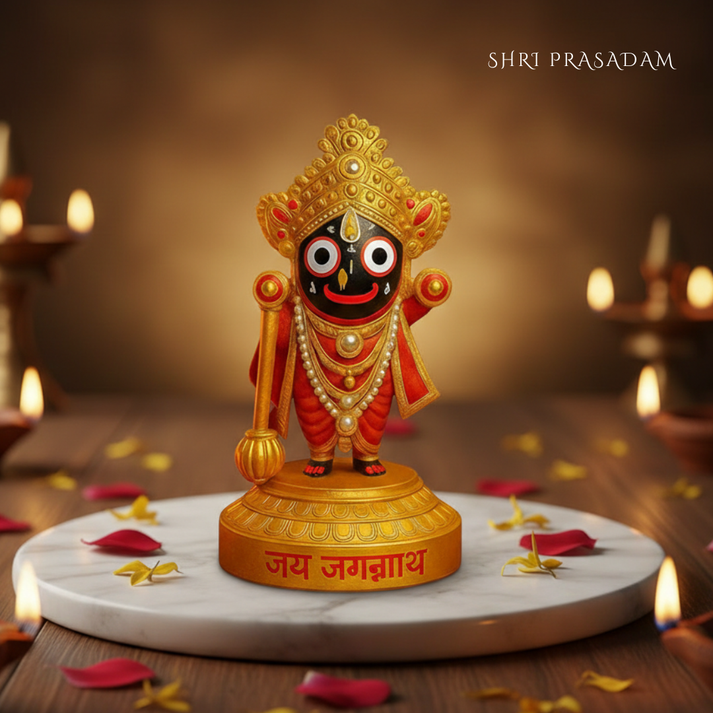
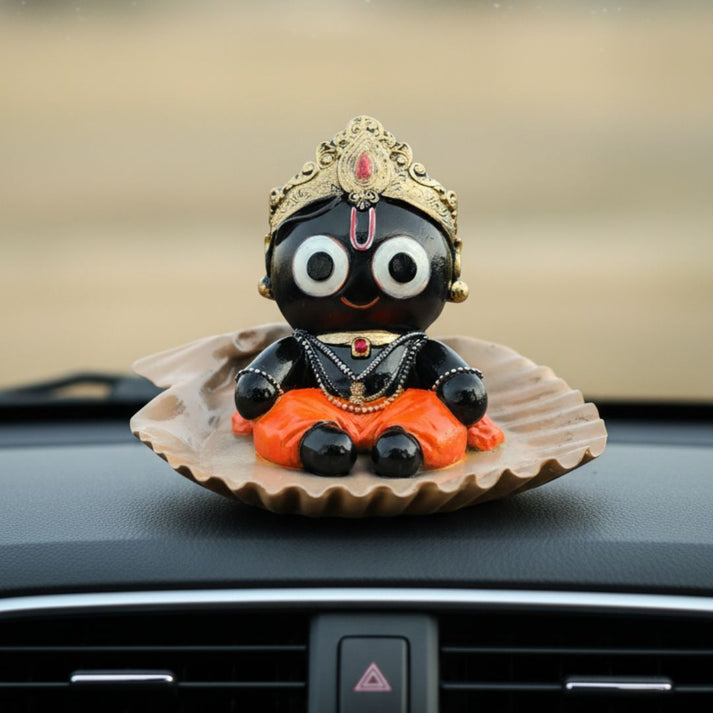
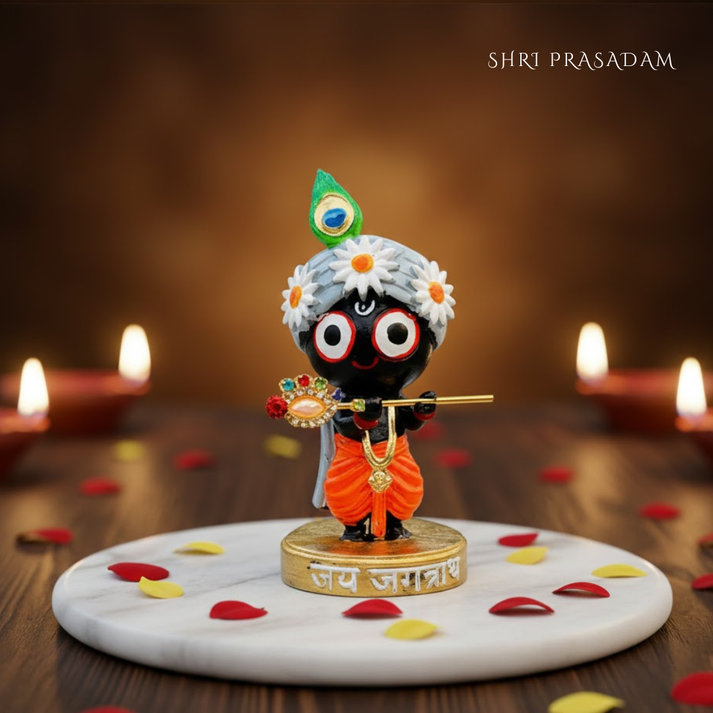
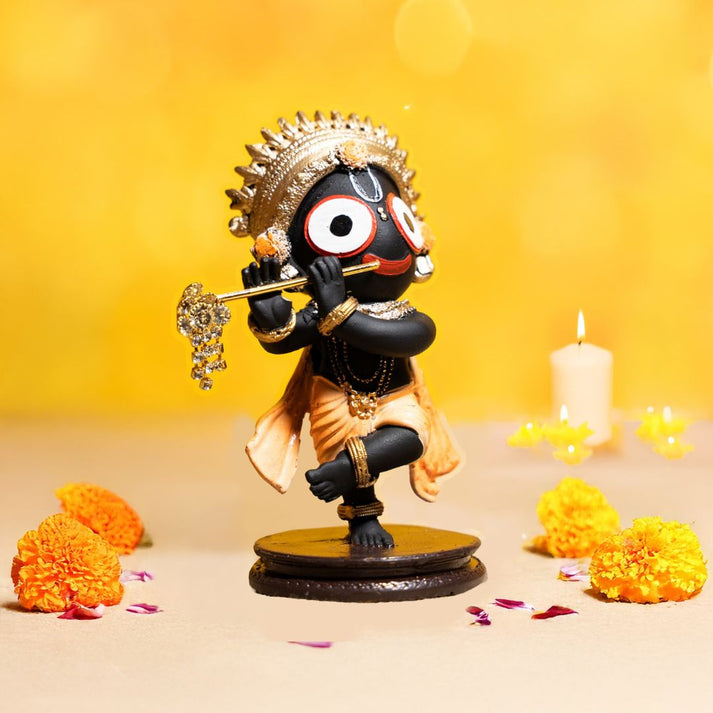
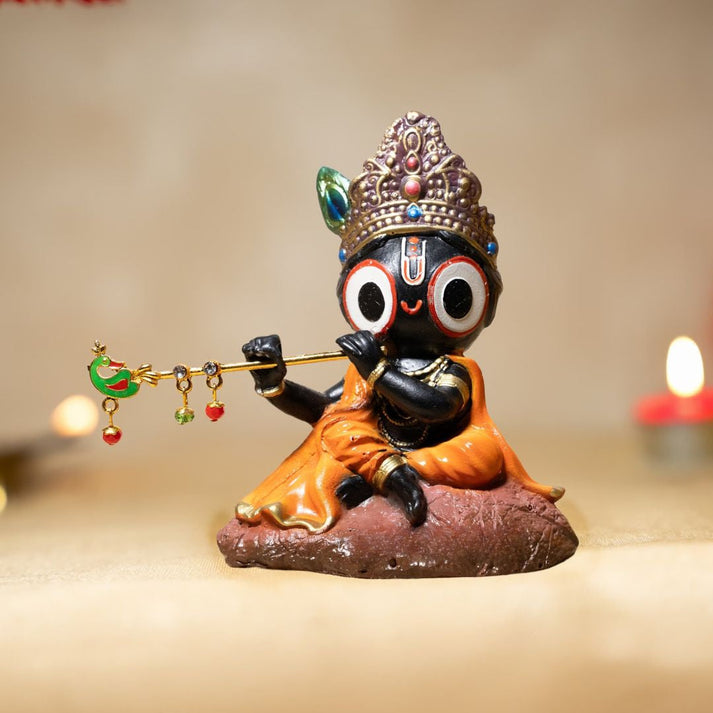
Explore Divine Jagnnath Murti
Rath Yatra Rituals: What Happens Before, During & After
Snana Yatra - The Sacred Bath
About 18 days before Rath Yatra, on Purnima Tithi of the Jyeshtha month, the idols of Jagannath, Balabhadra, and Subhadra undergo a ceremonial Vedic bath called Snana Yatra. The deities are bathed using 108 buckets of sacred water. After this bath, the idols are kept in seclusion a period called Ansara representing a time of rest and spiritual renewal.
Gundicha Marjana - Cleaning of the Destination Temple
A day before the Rath Yatra procession begins, devotees participate in a ceremonious cleaning of the Gundicha Temple called Gundicha Marjana. This act of purification is an expression of love and readiness to receive the Lord.
Chera Pahara - The Royal Sweeping
In one of the most poignant rituals of the festival, the royal successor of Odisha the Gajapati King sweeps the chariot with a golden broom and sprinkles sandalwood water, humbling himself before the Lord. This act, known as Chera Pahara, symbolises that even the mightiest of kings is merely a servant in the presence of God.
The Procession Itself
The idols are carried from the Jagannath Temple to the chariots in a festive procession. Thousands of devotees pull the chariots through the 2–3 km route to the Gundicha Temple, chanting bhajans and hymns all the way. The deities remain at the Gundicha Temple for nine days before the return journey.
Bahuda Jatra - The Return Procession
After nine days at the Gundicha Temple, the deities return to their home in a procession called Bahuda Jatra. This return journey is celebrated with equal fervour and marks the completion of the divine sojourn.
Rath Yatra 2026 in Delhi & NCR: A Historic First at Thyagraj Jagannath Mandir
While Puri remains the sacred epicentre of Rath Yatra, the festival has been celebrated with growing enthusiasm across India and 2026 marks a truly landmark moment for devotees in Delhi and NCR.
For the first time in the history of Delhi and NCR, the Chaturdha Murti (the four divine forms Lord Jagannath, Lord Balabhadra, Maa Subhadra, and Shree Sudarshan) will be installed on three separate chariots at Thyagraj Jagannath Mandir in New Delhi. This is a remarkable development that brings the celebration significantly closer to the authentic Puri tradition.
Event Details - Rath Yatra 2026 Delhi
- Date: July 16, 2026
- Time: 2:00 PM onwards
- Starting Point: Thyagraj Stadium, Gate No. 1, New Delhi
- Highlight: First-ever Three Separate Chariots in Delhi-NCR
Why Three Separate Chariots Matters
In many cities outside Odisha, Rath Yatra is typically celebrated with a single, combined chariot. The introduction of three distinct chariots at Thyagraj Jagannath Mandir in 2026 is a significant ritual upgrade. Each deity will have their own dedicated rath just as in Puri giving devotees the experience of individually honouring Balabhadra, Jagannath, and Subhadra-Sudarshan. For the Odia and Jagannath devotee community in North India, this is both a cultural milestone and a spiritual triumph.
Facilities for Devotees at the Delhi Rath Yatra 2026
- Drinking water stations at regular intervals
- Medical aid booths with first-aid trained volunteers
- Rest zones especially for elderly devotees and families with children
- Wheelchair assistance for persons with disabilities
- Dedicated family and senior citizen sections
- Volunteer guidance desks throughout the route
- Sanitation facilities and housekeeping teams
- Security coordination with local authorities
How Rath Yatra Is Celebrated Across India
While Puri hosts the grandest celebration, Rath Yatra is observed with devotion and joy in cities and towns across India from Ahmedabad and Mumbai to Kolkata, Vrindavan, and now Delhi.
The ISKCON movement has played a significant role in taking the Rath Yatra tradition global, with major chariot processions held in cities like London, New York, Toronto, and San Francisco.
Wherever it is celebrated, the essential spirit remains constant: decorated chariots, collective chanting of 'Jai Jagannath!', distribution of Mahaprasad, cultural performances, and the profound joy of communal worship.
Odissi dance recitals, bhajan mandalis, kirtans, and Chhappan Bhog (56 food offerings) are common features of the celebration.
Devotional Activities to Participate In
- Pulling the chariot ropes - the most meritorious act of the festival
- Chanting 'Jai Jagannath' and participating in kirtans and bhajans
- Receiving and sharing Mahaprasad - the blessed food of Lord Jagannath
- Attending Aarti ceremonies at dawn and dusk
- Watching traditional Odissi dance performances
- Volunteering in seva (service) for procession logistics and prasad distribution
Tips for Devotees Attending Rath Yatra 2026
Whether you are visiting Puri for the grand celebration or attending the Delhi Rath Yatra at Thyagraj Jagannath Mandir, a little preparation goes a long way in making your experience smooth, safe, and deeply spiritually enriching.
- Arrive early to secure a good position and witness the beginning of the procession
- Wear light, comfortable, traditional clothing the mid-July heat can be intense
- Stay well-hydrated; use the water stations set up along the route
- Follow the instructions of volunteers and security personnel at all times
- Keep a close watch on children in the large crowds
- Participate in pulling the chariot ropes with respect and composure
- Maintain cleanliness along the procession route
- If visiting Puri, book accommodation well in advance millions attend
- For the Delhi event, reach Thyagraj Stadium, Gate No. 1 before 1:30 PM
Why You Should Not Miss Rath Yatra 2026
Some festivals are spectacles. Rath Yatra is an experience that changes you. The sight of three towering chariots each adorned with intricate hand-crafted decorations, billowing cloth, and flags moving slowly through streets filled with hundreds of thousands of voices all chanting the same sacred name, is unlike anything else in the world.
It does not matter whether you are a lifelong devotee or someone encountering Jagannath culture for the first time. The warmth, the inclusivity, and the sheer spiritual charge of Rath Yatra are accessible to every soul.
For devotees in Delhi and NCR especially, 2026 offers something truly once-in-a-lifetime: the chance to witness the historic first-ever three-chariot Rath Yatra in the capital. This is not just a festival it is a piece of living religious history being written in your own city.
नीलाचलनिवासाय नित्याय परमात्मने बलभद्रसुभद्राभ्यां जगन्नाथाय ते नमः
I offer my salutations to Lord Jagannatha, who resides in Nilachala, who is
eternal and supreme, accompanied by Balabhadra and Subhadra.