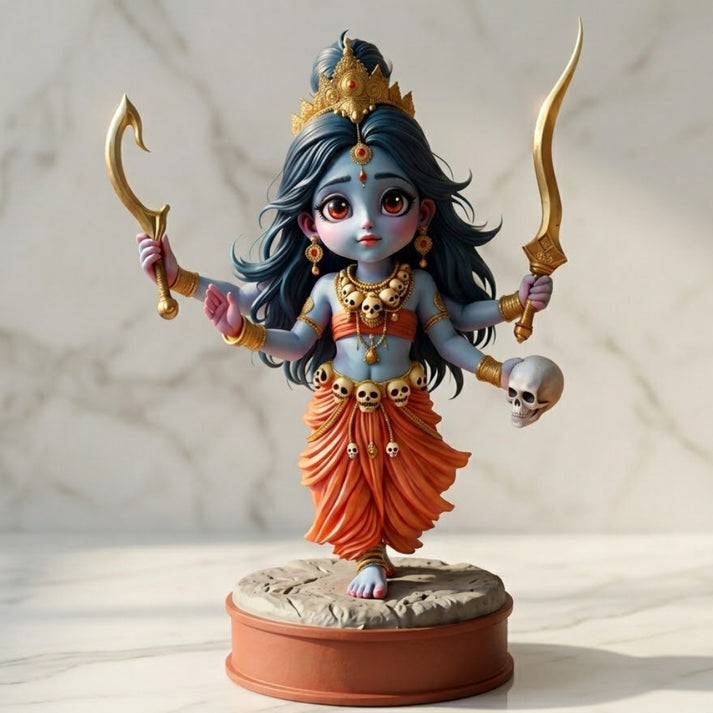
Navratri 2026 Date, Timing & Muhurat
In Sanskrit, Navaratri means nine nights. This Hindu festival is dedicated to Goddess Durga. It is celebrated twice a year during the months of Chaitra (March-April) and Ashwin (September-October).
Of the two, Sharadiya Navaratri, celebrated in the autumn, is observed with the greatest grandeur. In 2026, it will begin on Sunday, October 11, and continue until Monday, October 19; subsequently, Vijayadashami (Dussehra) will be celebrated on Tuesday, October 20.
Each day of Navaratri is dedicated to one of the nine forms of Goddess Durga (known as Navadurga) starting with Maa Shailaputri on the first day and concluding with Maa Siddhidatri on the ninth day. Devotees observe fasts, worship the Goddess, and celebrate the festival according to regional customs such as Garba in Gujarat, Durga Puja pandals in Bengal, and the Golu display in South India. These nine nights commemorate the battle between Goddess Durga and the demon Mahishasura, culminating in her victory on the tenth day; thus, the festival symbolizes the triumph of good over evil.
Since the dates are determined by the lunar calendar (Panchang), it is advisable to check a local Panchang for the precise auspicious timings (Muhurat) applicable to your city.
Names of the Nine Goddesses, Dates, and Worship Timings
Each of the nine days of Shardiya Navratri is associated with a specific Tithi (lunar day) and a form of Goddess Durga. The table below lists the dates for 2026 and the timings for the Tithi on each day.
All Tithi timings are in IST (based on Ujjain), while the Ghatasthapana timing is provided for Delhi. Timings may vary by a few minutes in other cities.
Some calendars indicate that Mahagauri Puja falls on October 18, while many others list Durga Ashtami for October 19 because the Ashtami Tithi (lunar day) prevails at sunrise on that day. Please follow the traditions observed by your family or local temple.
Panchang sources specify a time window for the Tithi rather than a fixed Muhurat (auspicious time) for each day. Plan your daily worship based on the Tithi applicable for that day, using your local sunrise time and Panchang.
Navaratri 2026 Dates and Timings - Complete Details
The key events for Sharad Navaratri 2026 are as follows: Pratipada and Ghatasthapana on October 11; Durga Ashtami and Maha Navami on October 19; and Vijayadashami, along with the Paran (conclusion of the fast), on October 20. The festival will be celebrated from October 11 to October 19.
This year, the Tithis (lunar days) towards the end of Navaratri fall in close succession. On October 19, Ashtami will end at approximately 10:53 AM, and the remainder of the day will be observed as Navami. Consequently, Maha Ashtami, Sandhi Puja, and Maha Navami will all be celebrated on the same day.
There may be a difference of a minute or two regarding the end time of the tithi across different sources. The Bengal Panjika follows a different rule, which is explained below in the section dedicated to West Bengal. Be sure to consult your citys Panchang before planning your fast and worship.
What is Ghatasthapana?
Ghatasthapana, also known as Kalash Sthapana, is the first and most significant ritual of Navratri, performed on the very first day. A water-filled Kalash (pot) is placed upon a layer of soil sown with barley seeds, with mango leaves and a coconut placed atop it. An Akhand Jyoti (a lamp that burns continuously for nine days) is lit beside it.
The Kalash is considered a symbol of the universe, while the flame represents the infinite energy (Shakti) of Goddess Durga. Devotees invoke the Goddess into the Kalash, and the nine days of worship and fasting commence following this ritual.
Ghatasthapana Muhurat 2026
In 2026, Ghatasthapana falls on Sunday, October 11. The auspicious time (Muhurat) occurs during the first part of the day after sunrise while the Pratipada Tithi is active; in New Delhi, this window is from 6:19 AM to 10:12 AM. For Ujjain, the timing is from 6:26 AM to 10:17 AM.
Panchang calculations indicate that Chitra Nakshatra and Vaidhriti Yoga will both be prevailing that morning—periods traditionally avoided for Kalash Sthapana. Therefore, the Abhijit Muhurat is recommended as a safe alternative: 11:44 AM to 12:30 PM in Delhi and 12:01 PM to 12:48 PM in Mumbai.
Since the timing varies based on the sunrise in your specific city, please verify the details with your local Panchang or family priest.
Navratri Celebrations Across India

Navratri Celebrations in Gujarat
Navratri is one of Gujarats biggest festivals. People observe full or partial fasts and gather every night for Garba. Garba is a folk dance performed in a circular formation around a lamp or a decorated earthen pot known as a Garbo.
Dandiya Raas is equally popular; in this dance, partners strike decorated sticks together in rhythm. Community Garba circles can involve hundreds or even thousands of dancers, and the tradition is now celebrated through large-scale events in cities across India.
Navratri Celebrations in West Bengal
In West Bengal and other parts of Eastern India, Navratri is celebrated as Durga Puja, the regions most significant annual festival. Thousands of pandals (temporary marquees) are erected, and clay idols of Goddess Durga crafted by artisans in places like Kumartuli, Kolkata are worshipped. Key rituals include Sandhi Puja and Kumari Puja on Ashtami, and Sindoor Khela on Vijayadashami.
Bengal follows its own Panjika (almanac). According to Bengali traditions, Maha Navami falls on October 20 and Vijayadashami on October 21 one day later than in most other parts of India. Please check the schedule of your local Puja committee.
Navratri Celebrations in Maharashtra
In Maharashtra, the festival typically begins with Ghatasthapana. A copper or brass pot (kalash) filled with water is placed atop a heap of rice; a lamp is kept lit for nine nights, and household members worship the pot daily. On the ninth day, Ghat Puja is performed, and the Ghat is removed.
Women and girls also observe the folk tradition of Bhondla, in which they dance around an image of an elephant and sing traditional songs. Many communities also invite traditional musicians known as Gondhalis to sing hymns in praise of the Goddess.
Navratri Celebrations in North India
In North India, many households perform Ghatasthapana (the ritual installation of the sacred pot), keep an eternal flame (Akhand Jyoti) burning for nine days, and observe fasts throughout the festival. Kanya Puja is performed on Ashtami or Navami; during this ritual, young girls are honored as embodiments of Goddess Durga and are offered food and gifts. Devotees also visit temples during these nine days.
In Punjab and neighboring regions, Jagrata. an all-night devotional worship session—is very popular. Ramlila performances also take place during these nine days in parts of Uttar Pradesh and other states; this tradition was designated as Intangible Cultural Heritage by UNESCO in 2008.
Navratri Celebrations in Himachal Pradesh
Himachal Pradesh is renowned for its Kullu Dussehra. It is unique because it begins on the day of Vijayadashami- the very day Dussehra concludes elsewhere. Held at the Dhalpur Ground in Kullu, the festival commences with the chariot procession of Lord Raghunath and spans seven days. In 2026, it is scheduled to be held from October 20 to October 26.
More than 300 local deities participate in this festival, and the effigy of Ravana is not burnt. The tradition originated in the mid-17th century, and the event was declared an international festival in 1972.
Navaratri Celebrations in South India
In Tamil Nadu, Golu (or Kolu) is celebrated during Navaratri; this involves arranging dolls that depict deities, animals, and scenes of rural life. Families invite friends and relatives to view the display and exchange sweets and gifts. This same tradition is known as Bommala Koluvu in Andhra Pradesh and Gombe Habba in Karnataka.
In Karnataka, the festival is called Dasara, and the Mysuru Dasara procession features an idol of Goddess Chamundeshwari. In Kerala, books, tools, and musical instruments are worshipped during Ayudha Puja, and children begin their formal education during the Vidyarambham ceremony on Vijayadashami.
Navratri and Dussehra 2026
Dussehra, or Vijayadashami, is celebrated on the tenth day after the commencement of Navratri and symbolizes the victory of good over evil. In many parts of India, it is celebrated to commemorate Lord Ramas victory over Ravana. In Eastern India, it marks the conclusion of Durga Puja and signifies Goddess Durgas victory over Mahishasura.
Dussehra follows nine nights because, according to tradition, Goddess Durga battled Mahishasura for nine nights and achieved victory on the tenth day. According to another widely held belief, Lord Rama worshipped Goddess Durga before waging war against Ravana. In 2026, Dussehra falls on Tuesday, October 20.
Frequently Asked Questions about Navratri 2026
When is Navratri in 2026?
Sharad Navratri 2026 will be observed from Sunday, October 11, to Monday, October 19. Chaitra Navratri was celebrated earlier in the year, from March 19 to March 27.
When will Sharad Navratri begin in 2026?
It will begin on Sunday, October 11, 2026, on the Shukla Pratipada (first day of the bright fortnight) of the Ashwin month.
When is Ghatsthapana in 2026?
Ghatsthapana will take place on Sunday, October 11, 2026—the first day of Navratri.
What is the Muhurat for Ghatsthapana in 2026?
In New Delhi, the Muhurat is from 6:19 AM to 10:12 AM. Since Chitra Nakshatra and Vaidhriti Yoga coincide with this period, the Abhijit Muhurat (11:44 AM to 12:30 PM in Delhi) is considered a safer option. Please verify the timings for your specific city.
When is Durga Ashtami in 2026?
According to most Panchangs (almanacs), Durga Ashtami falls on Monday, October 19, 2026, with Sandhi Puja scheduled from 10:28 AM to 11:16 AM. Some calendars indicate the Ashtami fast on October 18; therefore, please follow your local traditions.
When is Maha Navami in 2026?
Maha Navami falls on Monday, October 19, 2026. According to the Bengal Panjika, it is on October 20.
What are the nine forms of Goddess Durga?
In order: Shailaputri, Brahmacharini, Chandraghanta, Kushmanda, Skandamata, Katyayani, Kalaratri, Mahagauri, and Siddhidatri.
Why is Navaratri celebrated for nine days?
Navaratri means "nine nights." According to tradition, Goddess Durga battled the demon Mahishasura for nine nights and emerged victorious on the tenth day. Each of the nine days is dedicated to a specific form of the Goddess.
All the relevant sources used for this article are listed below.
- Prokerala – Navratri 2026 (tithi timings, dates, nine forms): https://www.prokerala.com/festivals/navratri.html
- PanchangBodh – Sharad Navratri 2026 (Ghatasthapana, Abhijit, Ashtami–Navami): https://panchangbodh.com/sharad-navratri
- Dekho Panchang – Navaratri (Sharad) 2026: https://dekhopanchang.com/en/festivals/navaratri
- Drik Panchang – Maha Navami 2026 and Navratri Parana: https://www.drikpanchang.com/navratri/durga-puja/maha-navami-date-time.html?year=2026
- Mangalmay – Navratri 2026 (Sandhi Puja, Bengal panjika dates): https://mangalmay.com/festivals/navratri
- Wikipedia – Navaratri (regional traditions, Navadurga, Dussehra): https://en.wikipedia.org/wiki/Navaratri
- Wikipedia – Kullu Dussehra: https://en.wikipedia.org/wiki/Kullu_Dussehra
- Trivenicabs – Kullu Dussehra 2026 dates: https://www.trivenicabs.in/kullu-dussehra-2026-by-car
- Discover Kullu Manali – Kullu Dussehra (international festival status, 1972): https://discoverkullumanali.in/weeklong-kullu-dussehra-begins-with-rath-yatra-of-lord-raghunath/
- The Wild Cone – Kullu Dussehra facts: https://thewildcone.com/?p=36718
- IndiaBonds – When is Navratri 2026 (Chaitra Navratri dates): https://www.indiabonds.com/kuchbhi/when-is-navratri-2026/