

Panchmukhi Hanuman Ji: The Ultimate Symbol of Multi-Dimensional Strength
Panchmukhi Hanuman Ji: The Most Powerful Form of Bajrangbali
The story, significance, 5 divine faces, Vastu directions, Ashta Siddhis, and everything you need to know about this supreme form of Lord Hanuman.
🛕 Explore Our CollectionIf there is one deity in Hindu mythology who is worshipped with the heart and feared by evil with equal intensity, it is Lord Hanuman. His very name carries the power to drive away negativity, fill hearts with courage, and bring the blessings of Lord Ram into the lives of his devotees.
But within the many forms of Hanuman Ji, there is one form that stands above all in terms of divine power, cosmic protection, and spiritual significance the Panchmukhi Hanuman. Panchmukhi, which literally means "five-faced," is not just an artistic representation. It is a living, breathing story of sacrifice, devotion, and the limitless power of bhakti.
Whether you are a lifelong devotee or someone just beginning to explore the depths of Sanatan Dharma, this blog will take you through everything you need to know about Panchmukhi Hanuman Ji, the story behind this divine form, the meaning of each face, the best way to keep this idol at home, and the spiritual rewards that await true devotees.
🔱Who Is Panchmukhi Hanuman?
Panchmukhi Hanuman, also known as Panchamukha Anjaneya Swamy, is a magnificent, all-powerful form of Lord Hanuman in which he is depicted with five divine faces each representing a distinct deity and facing a different cosmic direction.
The word "Panchmukhi" comes from two Sanskrit words Panch (five) and Mukhi (faced). Together, they describe a form of Hanuman Ji that is simultaneously looking in all five directions: East, West, North, South, and upward protecting his devotees from every possible threat, from every corner of the universe.
This form is not just popular, it is considered among the most sacred and powerful of all Hanuman manifestations. It is widely regarded as the most powerful avatar of Lord Hanuman. Worshipping this form is believed to provide complete, 360-degree divine protection, protecting the devotee from negative energies, evil forces, health problems, black magic, financial troubles, and fear itself.
The iconographic description of Panchamukha Hanuman first appears in a sacred Tantric text called the Hanumat Rahasyam. While this form has roots in Tantric tradition, it has become one of the most widely revered and worshipped forms of Hanuman Ji in homes and temples across India and the world.
📖The Story Behind Panchmukhi Hanuman: The Ahiravana Episode
Every powerful divine form has a story behind it. The story of Panchmukhi Hanuman is one of the most thrilling, dramatic, and deeply moving episodes in the Ramayana, the tale of the cunning demon Ahiravana and the rescue of Lord Rama and Lakshmana from the depths of Patal Lok (the underworld).
The great war of Lanka was at a turning point. When Lakshmana killed Indrajit (Meghnadh), the son of Ravana, the demon king was devastated. In his desperation, he turned to his step-brother Ahiravana, the powerful king of Patal Lok and a master of occult arts and tantra-mantra for help.
Ahiravana was no ordinary demon. Using his mastery of dark magic, he disguised himself as Vibhishana, the noble brother of Ravana who had joined Rama's camp. While the entire army slept, Ahiravana spirited away both Lord Rama and Lakshmana to the depths of Patal Lok, intending to sacrifice them to the goddess Mahamaya.
When Vibhishana discovered the treachery, he immediately informed Hanuman Ji. Without a moment's hesitation, Hanuman leaped into Patal Lok. At the gates, he encountered Makardhwaj, a powerful warrior who was, incredibly, Hanuman's own son, born from a drop of his sweat that had fallen into the ocean. After defeating him in battle, Hanuman Ji pressed deeper into the underworld.
Hanuman Ji quickly discovered Ahiravana's secret. The demon had received a divine boon that protected his life: he could only be killed by someone who could extinguish five lamps burning in five different directions simultaneously. Ahiravana had placed these lamps strategically - East, West, North, South, and above believing this condition made him completely invincible.
In that moment, Hanuman Ji revealed his true divine power. He assumed the Panchmukhi (five-faced) form with the faces of Hanuman (East), Narasimha (South), Garuda (West), Varaha (North), and Hayagriva (upward) simultaneously looking in all five directions. With one mighty breath from all five faces at once, he extinguished all five lamps in a single instant and ended Ahiravana's life. Lord Rama and Lakshmana were freed, and Hanuman Ji's glory was celebrated across all three worlds.
🏆 The significance of this story is profound: Panchmukhi Hanuman was not born from pride or desire for power. He took this form solely to protect his beloved Lord Rama. This is the very essence of nishkam seva selfless service through pure devotion.
Explore Divine Hanuman Ji Murti
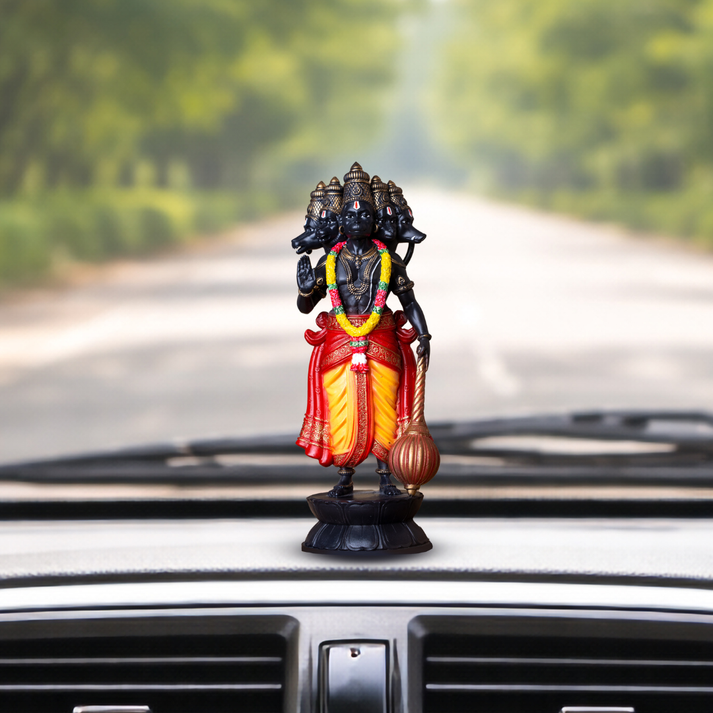
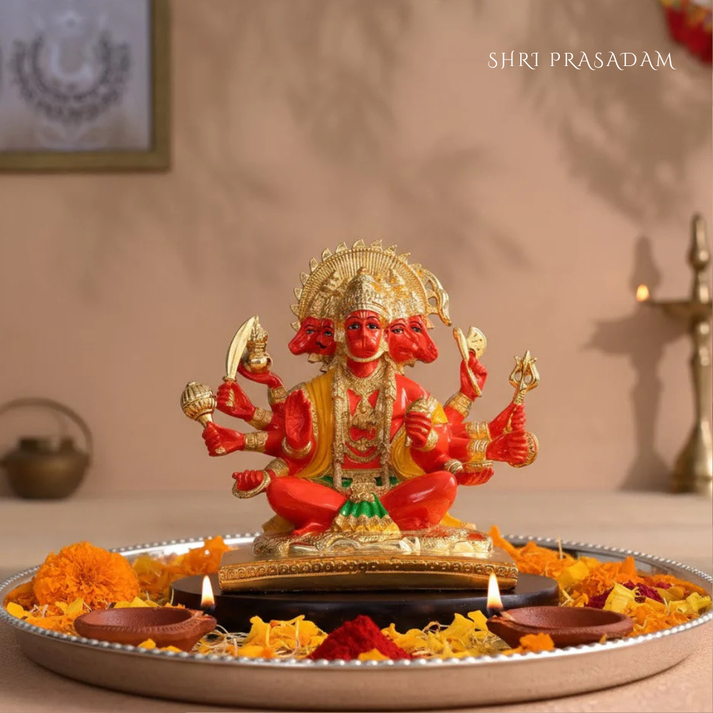
✨The 5 Divine Faces of Panchmukhi Hanuman Meaning & Significance
Each face of Panchmukhi Hanuman is not just a visual element. it is a complete spiritual universe in itself. Each face represents a powerful deity, faces a specific cardinal direction, and grants a distinct divine blessing to the devotee who worships it with a sincere heart.
Shri Hanuman
The original face of Bajrangbali himself, facing the East, the direction of new beginnings and sunrise. This face represents pure devotion, courage, and Ishta Siddhi (fulfillment of one's true desires). Worshipping this face washes away all accumulated sins, grants mental purity, and fills the heart with unwavering faith in Lord Ram.
Narasimha
The terrifying yet deeply compassionate lion-man avatar of Lord Vishnu, facing the South, the direction of Yama (death) and heavy energies. This face represents fearlessness, victory over enemies, and Abhishta Siddhi. It destroys evil spirits, removes deeply rooted fears, protects from enemies, and purifies the home of all negative forces.
Garuda
The magnificent divine eagle and vehicle of Lord Vishnu, facing the West. Garuda is the destroyer of serpents and poison. This face represents speed, vigilance, and Sakala Saubhagya (complete good fortune). It protects against black magic, removes the effects of evil eye (nazar), cures diseases, and removes all kinds of poisonous influences from one's life.
Varaha
The cosmic boar avatar of Lord Vishnu who rescued the Earth from the demon Hiranyaksha, facing the North, the direction of prosperity and growth. This face represents stability, prosperity, and Dhana Prapti (attainment of wealth). It removes ill health, banishes plagues and fevers, ensures stability in life, and attracts the energy of abundance and Lakshmi into the devotee's home.
Hayagriva
The horse-headed avatar of Lord Vishnu, the supreme embodiment of divine wisdom and learning, facing upward, the direction of the heavens and the cosmos. This face represents knowledge, intelligence, and Sarva Vidya Siddhi (mastery in all forms of learning). Worshipping this face blesses students with sharp intellect, grants clarity of thought, and ensures success in education, art, and all intellectual pursuits.
💡 Together, these five faces form a complete cosmic shield protecting the devotee from all directions: the East brings purity, the South destroys fear, the West removes evil, the North attracts prosperity, and the upward face illuminates the mind with wisdom. This is why Panchmukhi Hanuman is called the most complete and powerful form of Lord Hanuman.
🌟The Significance of Panchmukhi Hanuman: Why This Form Matters
The significance of Panchmukhi Hanuman goes far beyond just the mythological story. It is a profound spiritual teaching disguised in the language of devotion and iconography.
🕉️ The Five Paths of Worship
In Hinduism, there are five recognized ways of praying to God, and Panchmukhi Hanuman beautifully represents all five:
- Naman: Bowing down, saluting, offering reverence with humility
- Smaran: Remembrance, keeping God constantly in one's thoughts
- Keerthanam: Singing glories, chanting, sharing devotion
- Yachnam: Seeking, asking with complete surrender
- Arpanam: Total offering of self, surrendering completely to God
Hanuman Ji himself embodied all five of these in his service to Lord Ram. Each face of the Panchmukhi form represents one of these divine ways of worship making this form a complete guide to spiritual life.
🔱 The Tantric Dimension
Panchmukhi Hanuman is also deeply significant in the Tantric tradition of Hinduism. Because of the circumstances in which this form was assumed entering Patal Lok, fighting a master of dark arts, using cosmic power to defeat a supernatural boon this form is considered a Tantric aspect of Hanuman. Many tantric practitioners and sadhus worship Panchmukhi Hanuman specifically to gain protection from negative occult forces, black magic, and dark spiritual influences.
Panchmukhi Hanuman also carries a deep philosophical message: True strength is never one-dimensional. Real power comes from balancing multiple qualities simultaneously courage, compassion, wisdom, protection, and unwavering devotion. In a world where challenges come from every direction, this form teaches us to be complete human beings.
🏠Is It Good to Keep Panchmukhi Hanuman at Home?
Absolutely yes, and in fact, many Vastu Shastra experts and spiritual teachers strongly recommend keeping a Panchmukhi Hanuman idol or image in the home. Here is why it is considered highly auspicious:
- Provides comprehensive divine protection from all five directions simultaneously
- Removes Vastu Dosh (Vastu defects) that may be causing problems in the home
- Protects against evil eye (nazar), black magic, and negative energies
- Creates an atmosphere of peace, positivity, and divine presence
- Strengthens family bonds and reduces internal conflicts and disputes
- Attracts health, prosperity, and success for all members of the household
- Gives children courage, focus, and a spiritual foundation
🧭 Vastu Guide: Where to Place Panchmukhi Hanuman at Home
South-facing wall or entrance is considered the most powerful placement. The Narasimha face looking South acts as a divine guard against negative energies.
Puja room, main entrance, or living room, an elevated, clean, and well-lit space. This ensures the idol receives proper respect and the energy flows well.
Standing (Veera Hanuman) is ideal for the main entrance or south-facing wall. Sitting (Shanta Hanuman) is better for the puja room and meditation.
Never in the bedroom, near the bathroom/toilet, on the floor directly, or in places that are dirty or cluttered. God idols require a clean, respectful space.
⚠️ Important Tip: When placing the idol at the entrance, ensure that anyone entering the home first faces and receives the blessings of Hanuman Ji. Many devotees light a diya (lamp) with sesame or mustard oil every Tuesday and Saturday as an offering to Panchmukhi Hanuman Ji.
🧘Standing or Sitting: Which Panchmukhi Hanuman Is Better?
This is one of the most commonly asked questions by devotees. Both forms are sacred and powerful, but they carry different energies and are suited for different purposes:
Standing Panchmukhi Hanuman (Veera/Warrior Form): This form depicts Hanuman Ji standing tall and commanding, holding his weapons, radiating strength and fearlessness. This form is best placed at the main entrance of the home or on the south-facing wall. It is the form of a guardian protecting the household from all external threats, negative energies, and enemies. If you feel your home needs protection, strength, or if there is constant conflict or negativity, the standing form is ideal.
Sitting Panchmukhi Hanuman (Shanta/Peaceful Form): This form depicts Hanuman Ji in a seated, calm, and meditative posture. It radiates deep peace, spiritual wisdom, and inner strength. This form is ideal for the puja room or meditation space. If you want to create an atmosphere of peace, concentration, spiritual growth, and devotion in the home, the sitting form is the better choice.
✅ The ideal arrangement is to have a standing Panchmukhi Hanuman at the entrance (for protection) and a sitting form in the puja room (for devotion and peace). Together, they create a complete spiritual environment in your home.
⚖️What Is the Difference Between Normal Hanuman and Panchmukhi Hanuman?
Both forms of Hanuman Ji are sacred and deeply loved by devotees across the world. But there are some key differences in their nature, energy, and the kind of blessings they bestow:
The Regular Form of Hanuman (Ekmukhi: One-Faced)
The most familiar image of Hanuman Ji is the single-faced form often depicted as a humble, devoted devotee kneeling before Lord Ram, or as Veer Hanuman carrying the Sanjeevani mountain. This form primarily represents devotion, loyalty, and the power of bhakti. He is accessible, warm, and deeply personal the beloved friend and protector of every devotee.
The Panchmukhi Form (Five-Faced)
The Panchmukhi form is a cosmic, all-encompassing manifestation of Hanuman Ji's full divine power. While the regular form represents one aspect of his nature, the Panchmukhi form integrates five divine powers simultaneously protection, fearlessness, knowledge, prosperity, and devotion all at once. This form is associated with the Tantric tradition and is considered more powerful in terms of cosmic protection and spiritual energy.
💡 In simple terms, the regular Hanuman is the beloved devotee of Ram, the faithful companion who moves hearts with his surrender and love. The Panchmukhi Hanuman is Hanuman in his full cosmic glory the supreme protector who stands guard over the entire universe, looking in all five directions with the combined power of five divine deities.
⚡The 8 Powers (Ashta Siddhis) of Lord Hanuman
The Hanuman Chalisa contains one of the most celebrated lines in all of devotional literature: "Ashta Siddhi Nava Nidhi Ke Data, Asa Bar Deen Janaki Mata" meaning, "You are the bestower of the eight Siddhis and nine Nidhis, this boon was granted by Mother Janaki (Sita)."
These eight divine powers the Ashta Siddhis were blessed upon Hanuman Ji by Mata Sita herself, in recognition of his unparalleled devotion and selfless service. Here is what each Siddhi means:
Anima
The ability to reduce one's size to an atom. Hanuman used this to enter Lanka undetected. Teaches humility, the wisdom to make oneself small in ego despite immense power.
Mahima
The ability to grow infinitely large. Hanuman used this to carry the Sanjeevani mountain. Teaches expansive thinking, the courage to rise to any challenge, no matter how large.
Garima
The ability to become immovably heavy. Teaches groundedness staying firmly rooted in one's values and principles, unshaken by temptation or pressure.
Laghima
The ability to become lighter than air and soar freely. Hanuman used this to cross the ocean to Lanka. Teaches the art of letting go of burdens, grudges, and heaviness of heart.
Prapti
The ability to acquire anything anywhere, instantly. Teaches resourcefulness the understanding that a focused, devoted mind can find a way to achieve anything it truly desires.
Prakamya
The ability to fulfil any desire, to enter another's mind and understand their thoughts. Hanuman's desires were always aligned with Dharma. Teaches purity of intention.
Ishitva
The ability to control natural forces earth, air, water, fire. Used in battles to overcome enemy forces. Teaches responsibility great power must always be used in service of Dharma.
Vashitva
The ability to bring anyone or anything under one's influence. Hanuman used this power of love and devotion to win over even the hearts of enemies. Teaches that love and truth are the greatest powers of all.
🙏 The beautiful truth about Hanuman Ji's Ashta Siddhis is that he never used any of these powers for personal gain or glory. Every single Siddhi was used exclusively in service of Lord Ram and for the protection of his devotees. This is what makes his powers truly divine they flow not from ego, but from the infinite spring of selfless love.
💫Signs That Hanuman Ji Is With You
Many devoted worshippers of Hanuman Ji report experiencing certain signs and feelings that indicate the divine presence of Bajrangbali in their lives. While these are deeply personal spiritual experiences, here are the most commonly shared signs:
Unexplained Protection
You narrowly escape accidents or dangerous situations in ways that seem impossible to explain logically.
Sudden Inner Strength
During moments of extreme difficulty, you find an inexplicable surge of courage and strength from within.
Fragrance of Flowers
A sudden, sweet fragrance of jasmine or marigold flowers with no source nearby often reported in the puja room or at temples.
Red Colour Everywhere
You keep seeing the colour red (Hanuman Ji's sacred colour) frequently in unexpected places or situations.
Monkeys Appearing
Monkeys appearing near your home or path at significant moments. In the devotional tradition, monkeys are considered messengers of Hanuman Ji.
Chalisa in Your Mind
The Hanuman Chalisa begins playing in your mind spontaneously, even when you haven't consciously thought about it.
Deep Calm in Crisis
Instead of panic during a difficult situation, you experience a strange, deep peace and clarity as if someone has your back.
Problems Dissolving
Long-standing problems that seemed impossible to solve begin resolving on their own shortly after beginning sincere worship of Hanuman Ji.
👑What Is the Most Powerful Form of Hanuman?
Among all the forms and avatars of Lord Hanuman and there are many Panchmukhi Hanuman is widely regarded as the most powerful and complete manifestation. Here is why:
- It is the only form where Hanuman Ji simultaneously embodies the powers of five divine deities Hanuman, Narasimha, Garuda, Varaha, and Hayagriva
- It provides protection in all five cosmic directions at the same time
- It represents all five ways of worship in Hinduism simultaneously
- It was assumed specifically to defeat a demon who was considered conditionally invincible no ordinary power could defeat Ahiravana
- It is the form associated with Tantric protection the most powerful shield against occult forces, black magic, and dark spiritual energies
- It encompasses all eight Siddhis and all nine Nidhis in their complete, unified form
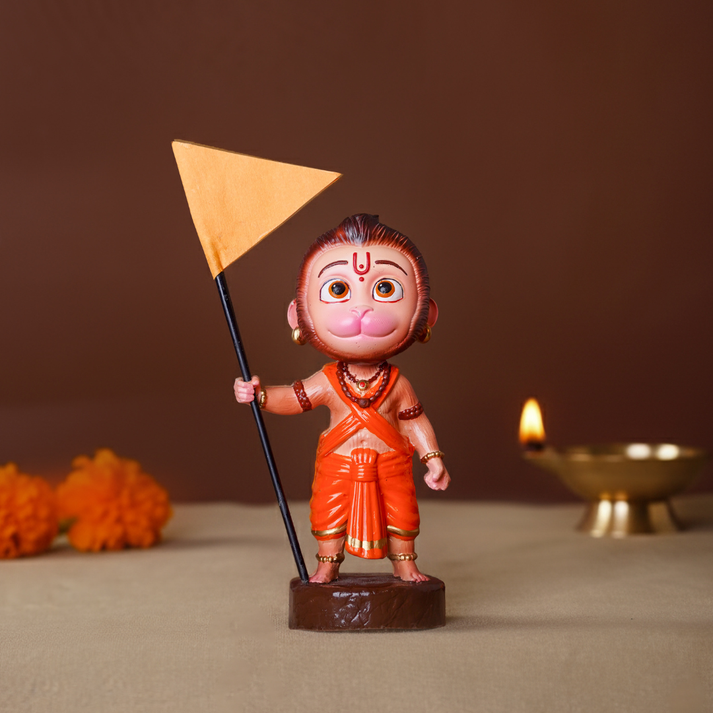
Other powerful forms of Hanuman include Veer Hanuman (the warrior), Sankat Mochan Hanuman (the reliever of difficulties), and Bal Hanuman (the child form radiating innocent devotion). Each of these forms carries its own unique beauty and power. But for comprehensive, all-encompassing divine protection, Panchmukhi Hanuman stands in a class of its own.
⚔️Which God Can Defeat Hanuman Ji?
This is a question that comes from a place of deep curiosity about the hierarchy of divine power in Hindu mythology. The truthful, scripturally accurate answer is: no god or force can truly "defeat" Hanuman Ji in the ultimate sense and here is why.
Hanuman Ji's power does not come from physical strength alone. It comes from something far greater his absolute, unwavering, selfless devotion to Lord Ram. The Ramayana and Puranas tell us that because of this divine love, Hanuman Ji is protected by the grace of Lord Ram at all times. As long as he remains in that state of pure bhakti, he is considered invincible.
There are a few mythological stories where great warriors initially had difficulties in combat with Hanuman including even Lord Ram's own arrows, which Hanuman endured harmlessly out of respect during a particular episode, and Bhima (of the Mahabharata) who found Hanuman's tail immovable despite his legendary strength. These stories are not about defeat they are about the demonstration of Hanuman's divine nature and the supremacy of bhakti over brute force.
The deeper spiritual teaching here is this: Hanuman Ji was never interested in proving his power or defeating anyone. He is the eternal servant of Lord Ram. His entire being is oriented toward love, service, and protection not conquest. This is why he is called Mahaveer, the greatest of the brave because his greatest power is his humility and devotion.
📿What Happens If You Read Hanuman Chalisa 100 Times?
The Hanuman Chalisa itself provides the answer. Saint Tulsidas wrote in the Chalisa: "Jo Sat Baar Paath Kar Koi, Chhutahi Bandi Maha Sukh Hoi" meaning, whoever recites the Hanuman Chalisa a hundred times becomes free from all bondage and attains great happiness.
Devotees who have undertaken this practice known as Shat Paath (hundred readings) report experiencing the following:
- Liberation from karmic bondage: old, deep-rooted problems that seemed impossible to overcome begin to dissolve
- Removal of fear: a profound, lasting fearlessness enters the heart and mind
- Financial improvement: many devotees report that financial blocks, debts, and money problems begin to clear
- Physical healing: chanting creates a powerful vibrational healing that is said to benefit chronic health issues
- Mental strength and clarity: concentration, memory, and emotional stability improve significantly
- Divine protection: a sense of being constantly watched over and protected by Hanuman Ji
- Deepening of devotion: the practice itself becomes a gateway into deeper spiritual states and love for Ram
💡 How to do the 100-time recitation: Begin on a Tuesday. Wear clean clothes. Light a lamp of sesame or mustard oil. Sit facing East or North. Before beginning, offer a simple prayer to Lord Ram first. You can complete the 100 recitations over multiple sessions across several days, or in one sitting if you have the capacity. Maintain celibacy and a vegetarian diet during the practice for maximum benefit.
🪔How to Worship Panchmukhi Hanuman at Home
Worshipping Panchmukhi Hanuman at home is a beautiful, simple, and deeply rewarding practice. You do not need elaborate rituals or expensive arrangements, Hanuman Ji is famously accessible and responds to sincere devotion above all else.
Daily Worship Ritual
- Naman (Bow): Begin by bowing your head before the image or idol of Panchmukhi Hanuman Ji and offering your heartfelt salutation
- Clean the space: Wipe the idol gently with a clean cloth. Offer fresh flowers especially marigold, jasmine, or red hibiscus (Hanuman's favourite)
- Light the lamp: Light a diya with sesame oil or mustard oil. This is considered highly auspicious for Hanuman worship
- Apply sindoor: Offer a small amount of sindoor (vermilion), this is a traditional and deeply beloved offering to Hanuman Ji
- Chant the Chalisa: Recite the Hanuman Chalisa at least once, with full concentration and devotion
- Offer prasad: Offer simple prasad such as besan ke laddoo (gram flour sweets), bananas, or jaggery
- Aarti: Conclude with the Hanuman Aarti "Aarti Kije Hanuman Lala Ki"
Special Days
Tuesday and Saturday are the most sacred days for Hanuman worship. On these days, extend your practice light extra lamps, offer sindoor, recite the Chalisa multiple times, and spend time in quiet contemplation of Hanuman Ji's qualities. Hanuman Jayanti (celebrated on the full moon of Chaitra month) is the most auspicious day of the year for Hanuman worship.
🙏 The most important thing in Hanuman worship is sincerity of heart. Hanuman Ji is known as Bhakta Vatsala one who is deeply moved by the love of his devotees. A single tear of genuine devotion carries more power than a hundred elaborate rituals done without feeling.
🛕 Bring Panchmukhi Hanuman Ji's Blessings Into Your Home
Explore our collection of authentic, devotionally crafted Panchmukhi Hanuman idols, framed photos, and sacred spiritual items delivered with love, directly to your doorstep across India.
❓Frequently Asked Questions
Jai Panchmukhi Hanuman Ji: The Eternal Guardian
Panchmukhi Hanuman Ji is not just a deity to be worshipped, he is a living philosophy of how to face life. Five faces, five directions, five divine powers all united in one supreme act of selfless love for Lord Ram. That is the real miracle of this form.
When you invite Panchmukhi Hanuman Ji into your home and your heart, you are not just placing an idol. You are welcoming a protector who looks in every direction, a guide who lights the way with wisdom, and a companion who stands with you in every darkness.


